KEY TAKEAWAYS
- Environment variables keep keys out of shared collections.
- Add tests for response shape and result states.
- The collection runner handles small CSV batches.
- Use scripts for production-scale verification.
- Every the Postman workflow result class should map to a defined workflow action.
- Deduplicate and validate before any paid the Postman workflow request.
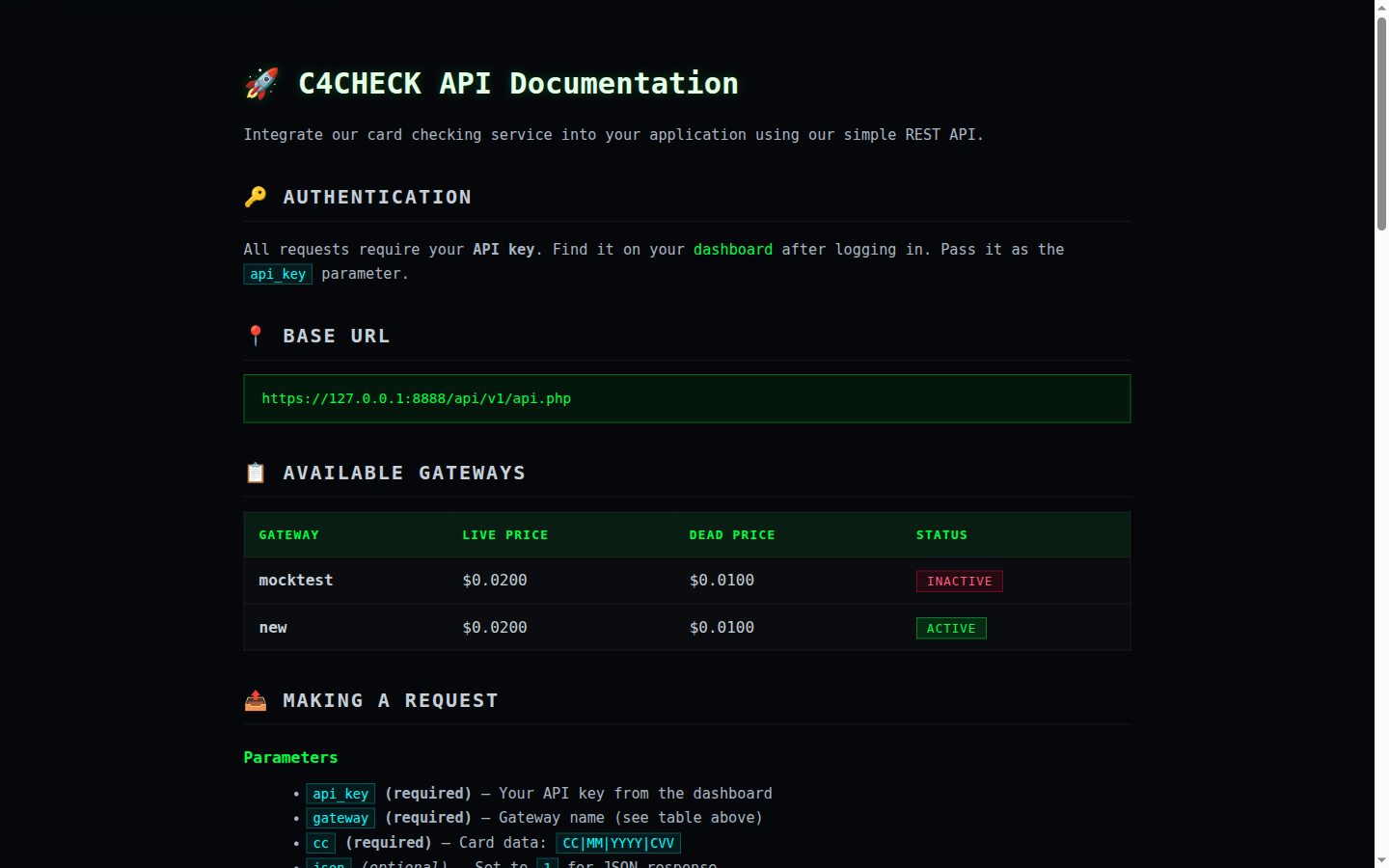
Postman is the fastest way to explore the card checker API before writing integration code. This setup uses environment variables so keys never live in shared collections.
1. Environment
base_url=https://c4check.com/api/v1/api.phpapi_key= your key (mark it secret in Postman)gateway= a gateway name from your admin
2. Request
GET {{base_url}}?gateway={{gateway}}&cc={{card}}&json=1
Headers: X-API-Key: {{api_key}}
Use a collection variable for card so the runner can override it per iteration.
3. Tests
pm.test('HTTP 200', () => pm.response.to.have.status(200));
const body = pm.response.json();
pm.test('classified or explicit error', () => {
  pm.expect(body).to.have.property('status');
  if (body.status) {
    pm.expect(['Live', 'Dead', 'Charge', 'Unknown']).to.include(body.result);
  }
});
pm.collectionVariables.set('balance', body.balance || '0');
4. Collection runner
Load a CSV of cards, run the collection with the CSV as data, and export the results. Keep iterations low (a few dozen) — Postman is not a load tester. For production-scale batches, use the bulk script or the streaming web checker.
Best practices
- Never commit the environment with the key; use Postman's secret variables.
- Assert against the documented response shape so API changes surface early.
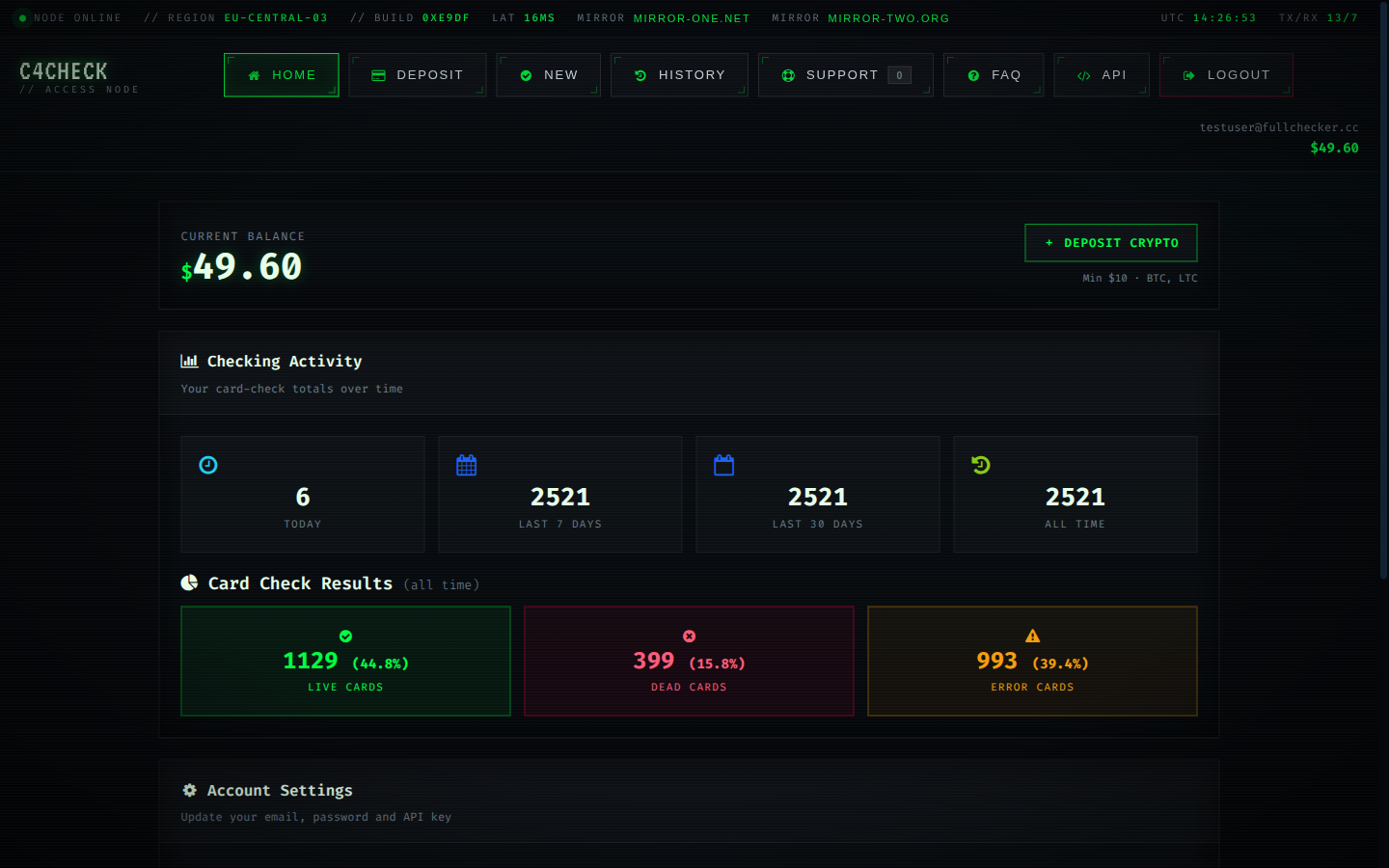
- Capture the balance to catch low-balance runs before they fail.
The Postman path is about repeatable exploration: a collection with the base URL, the key and the card string as variables, one request with a small test script, and a saved environment per deployment. That makes the API inspectable by the whole team without writing code.
Set the base URL to the production endpoint, mark the key as secret in the environment, and keep the card value in a collection variable so the runner can override it per iteration.
A concrete the Postman workflow example
GET {{base_url}}?gateway={{gateway}}&cc={{card}}&json=1
Headers: X-API-Key: {{api_key}}

pm.test('HTTP 200', () => pm.response.to.have.status(200));
Log request identifiers and outcomes, never full card numbers or the API key itself. Errors produce no classification and no charge, which makes a careful retry strategy effectively free. Reconcile timeout outcomes before assuming failure — the answer may exist even when the response did not arrive. Holding that line is what makes the Postman workflow reliable over time.
Working with the the Postman workflow integration
Add a circuit breaker: when the error rate crosses a threshold, pause the run and move the remainder to the fallback route. Regenerating the key takes one click on the dashboard and invalidates the old one immediately. Automation pays off on scheduled workloads: card-on-file audits and route health checks are the classic candidates. Log request identifiers and outcomes, never full card numbers or the API key itself. Write it down; the Postman workflow workflows live and die on small consistencies.
Handling keys and data in the Postman workflow
Aggregate statistics are computed without exposing individual records, which is why published numbers can be useful without being risky. Verification data is operational data — treat it with the same care as any other sensitive business record. Regenerate the key the moment compromise is suspected; every check remains attributed in history, so the audit trail survives. Check inputs are account-scoped and retained under the platform retention window, then purged by the scheduled cleanup. That single habit separates routine the Postman workflow from expensive the Postman workflow.
Interpreting outcomes in the Postman workflow
- Dead results in the Postman workflow route to recovery: dunning, an update-payment prompt or list cleanup.
- Errors in the Postman workflow return to the queue after the cause is fixed, because they produced no answer at all.
- Unknown results in the Postman workflow get one fallback pass on a second route, then a defined resting state.
- In the Postman workflow, live results route forward: billing, approval or completion, depending on the workflow.
Conflating outcomes is the most expensive habit in this area — an error treated as a dead card discards real inventory, and an unknown treated as live inflates confidence. A live answer is evidence about the account, not a guarantee about a specific future transaction; issuer rules can change between the check and the charge. When a result contradicts other evidence, re-check once after a reasonable interval rather than assuming the checker is wrong. It sounds obvious until a real run tests it.
The Postman workflow in practice: a repeatable path
Start with a pilot of fifty cards. It surfaces format mismatches and routing surprises while the cost of being wrong is still measured in cents. Run one primary gateway with a fallback route. When the primary degrades, re-run only the unclassified remainder on the fallback. Log request identifiers and outcomes, never full card numbers. Debugging rarely needs a PAN, and storing one is a liability. Validate checksums and expiry dates before any paid request; the free browser tools exist precisely so malformed rows never reach a provider. It sounds obvious until a real run tests it.
Using the Postman workflow on the right side of the line
A check does not move money, does not create a charge and does not touch the cardholder's credit file. Check only cards you own or are authorised to process; verification is not a shortcut around cardholder authorization. Verification is a signal, not a guarantee: a live result does not promise that a later charge will be approved. The habit costs nothing and removes a recurring class of mistakes.
Operating the Postman workflow at scale
Treat provider outages as routing problems: switch routes, recover the unclassified remainder, keep the answers you already paid for. Keep the API key server-side and regenerable; a leaked key is a billing incident as much as a security one. Track cost per classified card rather than cost per request; it is the only metric that reflects retries and unknown rates. Reconcile spend monthly against classified results; the difference between the two numbers is where retries hide. In the Postman workflow work, that is the difference between a signal and a guess.
Reading the Postman workflow results honestly
The four result classes are a decision matrix, not a score: live proceeds, dead recovers, unknown gets one careful retry, error returns to the queue. When a result contradicts other evidence, re-check once after a reasonable interval rather than assuming the checker is wrong. Two metrics describe any run: how many cards classify, and how long the pass takes. Everything else is commentary. The honest reading of unknown is "no answer yet". The card is neither good nor bad, and the remedy is a different route, not a repeat of the same one. Keep it in mind whenever the Postman workflow results are reviewed.